

Sustaining an injury can abruptly halt your daily routine, athletic pursuits, and overall quality of life. Whether you are dealing with a sudden sprain, a bone fracture, a repetitive strain injury, or recovering from a major orthopedic surgery, the path back to full health can feel long and frustrating. Many individuals assume that resting and waiting out the pain is the primary way to heal. While initial rest is necessary, prolonged inactivity often leads to muscle weakness, joint stiffness, and compensatory movement patterns that prolong your suffering.
Physical therapy acts as an active catalyst in the healing process. Far from just a set of standard exercises, it is a specialized, science-driven discipline designed to optimize how your body repairs itself. By understanding the biological mechanics of recovery and working with a licensed physical therapist, you can safely minimize down time, restore structural integrity, and return to your favorite activities much faster than you would through passive healing alone.
Stimulating Blood Flow and Managing Inflammation
The first phase of healing after any tissue trauma involves inflammation. While inflammation is a natural and necessary response to bring healing cells to the site of an injury, an excess of stagnant fluid can cause increased pressure, throbbing pain, and restricted joint movement.
Physical therapists utilize specific, gentle manual therapies and active movements to help pump swelling away from the injured area and back into the lymphatic system. Through carefully controlled mechanics, therapy promotes targeted circulation. Blood carries oxygen and vital nutrients that are absolutely essential for cellular repair. By increasing localized blood flow without overstressing the vulnerable tissue, physical therapy helps clear out cellular debris and metabolic waste products, speeding up the transition from the acute inflammatory stage to the active tissue-building stage.
Restoring Range of Motion and Preventing Scar Tissue
When muscles, tendons, or ligaments are torn or bruised, the body lays down collagen fibers to patch the damage. This patch is commonly known as scar tissue. Left to its own devices, scar tissue forms in a chaotic, disorganized pattern, often binding to surrounding healthy tissues and creating tight, inflexible knots. This random formation severely limits your range of motion and increases the likelihood of re-injury.
Physical therapists employ specialized techniques to address this issue early in the recovery process:
-
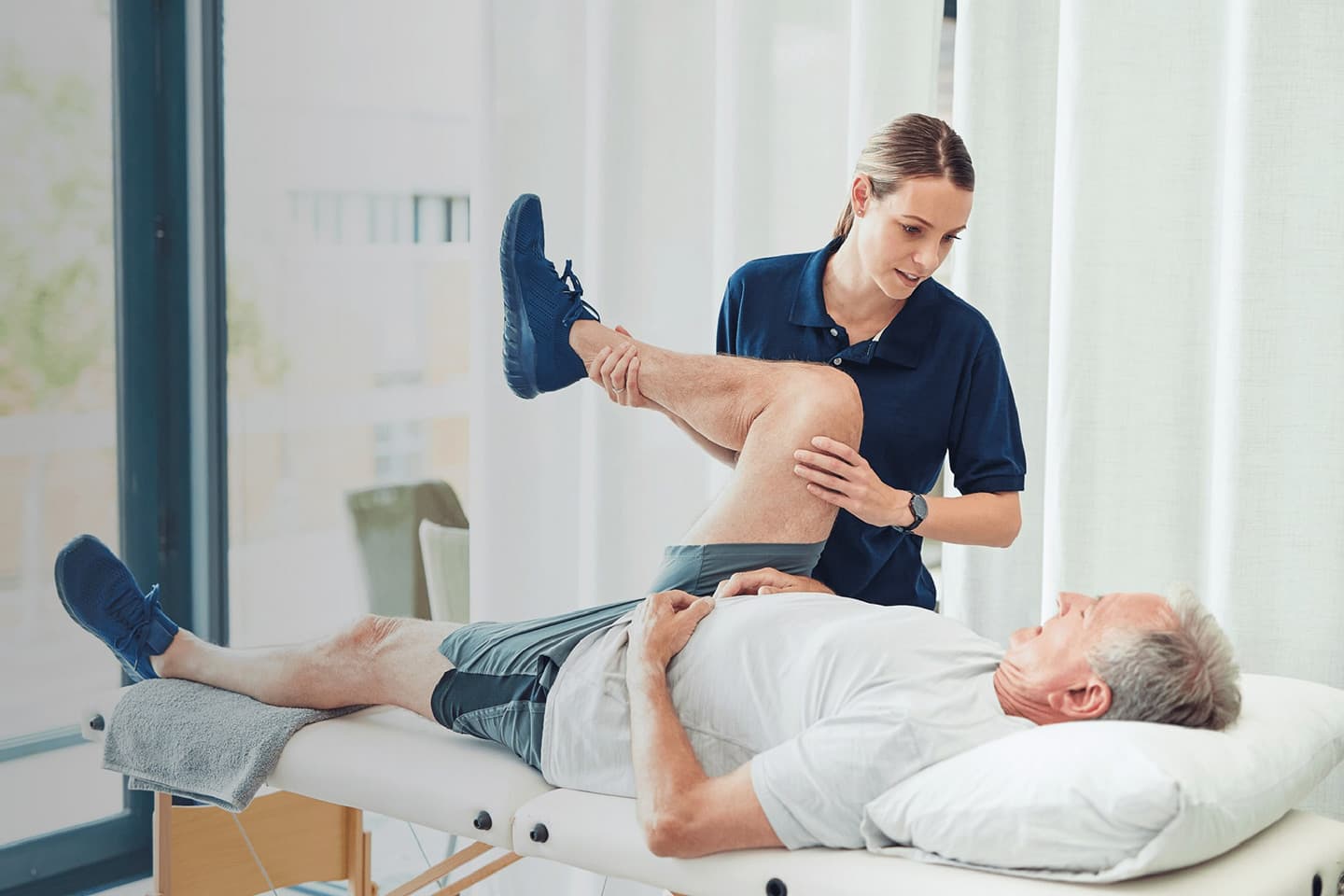
Passive Range of Motion: The therapist manually moves your injured limb through a safe, pain-free path to keep the joint lubricated and flexible when your muscles are still too weak to do the work.
-
Active-Assisted Movement: You begin moving the limb using your own muscular power, with the therapist providing just enough physical guidance to ensure smooth, proper tracking.
-
Targeted Soft Tissue Mobilization: Specific massage techniques apply targeted pressure along the scar tissue lines. This pressure coaxes the new collagen fibers to align parallel to your natural muscle fibers, ensuring the healed tissue remains strong, pliable, and resilient.
Combating Muscle Atrophy and Restoring Functional Strength
Inactivity causes muscle tissue to waste away with surprising speed, a process known as atrophy. Studies show that noticeable muscle loss can begin within just a few days of complete immobilization or non-weight-bearing status. When you lose muscle mass around an injured joint, that joint loses its primary support system, making it highly susceptible to further stress.
Physical therapy counteracts atrophy through progressive, customized load management. Therapists introduce isometric exercises, where the muscle contracts without moving the adjacent joint, to preserve strength even during early recovery phases. As healing progresses, they introduce concentric and eccentric resistance exercises using bands, weights, and specialized machines. This graduated approach strengthens the supporting musculature, effectively offloading stress from the healing ligaments or bones and rebuilding your foundational power safely.
Re-educating the Nervous System and Improving Proprioception
Every time you experience an injury, the communication highway between your brain and your body is disrupted. Tissues contain microscopic sensory receptors called proprioceptors, which inform your brain about where your limbs are positioned in space without you having to look at them. When an ankle is sprained or a knee is operated on, these receptors are damaged.
A lack of proprioceptive awareness explains why many people feel uncoordinated, unsteady, or clumsy when trying to use a limb after an injury. Physical therapists place a heavy emphasis on neuromuscular re-education. By utilizing balance boards, unstable surfaces, and single-leg stability exercises, therapy forces the brain to re-map the neural pathways connecting to the injured joint. This specialized training restores your subconscious balance, sharpens your reflexes, and protects you from accidental slips or twists during daily movements.
Correcting Compensatory Movement Patterns
When a specific part of your body hurts, you naturally alter the way you move to protect that area. For example, if you injure your right knee, you will subconsciously limp, shifting the vast majority of your body weight onto your left leg, hip, and lower back.
While these compensatory mechanisms are helpful for the first forty-eight hours, maintaining them over several weeks or months creates secondary structural problems. You may eventually find that your original knee pain has subsided, but you are now dealing with chronic, severe alignment pain in your lower back or opposite hip. Physical therapists look at the body as an interconnected system. They systematically analyze your gait, posture, and movement mechanics to identify and correct these deviations before they evolve into permanent, painful habits.
Utilizing Advanced Therapeutic Modalities
To augment manual therapy and exercise, physical therapists have access to a variety of clinical modalities that help alter pain perception and accelerate tissue healing at a cellular level.
-
Neuromuscular Electrical Stimulation: Sending mild electrical currents through the skin helps activate sleeping or inhibited muscles, preventing atrophy when traditional weight-bearing exercise is not yet possible.
-
Therapeutic Ultrasound: Sound waves penetrate deep into soft tissues, generating deep thermal heat that relaxes tight muscles, dilates blood vessels, and speeds up cellular metabolism.
-
Vasopneumatic Compression: Combining cold therapy with intermittent compression sleeves drastically reduces stubborn post-surgical swelling and numbs hyperactive nerve endings to manage severe pain naturally.
Frequently Asked Questions
Should I wait until my pain is completely gone before starting physical therapy?
No, you should not wait for the pain to vanish completely. Starting physical therapy early, under medical guidance, is often the key to reducing that pain. Therapists are highly trained to work within your current tolerance levels, utilizing non-painful movements, swelling management techniques, and gentle modalities to soothe hyperactive nerves while actively protecting the injury site.
How do I know if pain during a physical therapy session is safe or dangerous?
Safe pain is typically described as a dull ache, a deep stretch, or muscular fatigue that dissipates shortly after the movement stops. Dangerous pain is sharp, stabbing, sudden, or localized directly over a bone or joint line, and often causes you to hold your breath or tense up. You should always communicate any sharp or escalating discomfort to your therapist immediately so they can adjust your program.
What happens if I skip my assigned home physical therapy exercises?
Skipping your home exercises significantly slows down your recovery timeline. The sessions you complete in the clinic are designed to evaluate your progress, mobilize tissues, and introduce new movements. However, long-term physiological changes, such as building muscle tissue and remapping neural pathways, require daily, consistent repetition that can only be achieved by completing your prescribed home program.
Can physical therapy help me avoid an orthopedic surgery?
In many instances, yes. For conditions such as partial ligament tears, meniscus wear, degenerative disc disease, and rotator cuff strains, a comprehensive physical therapy program can strengthen the surrounding musculature to such a high degree that it stabilizes the joint, eliminates pain, and removes the need for surgical intervention entirely. This approach is frequently referred to as conservative management.
How long does a typical course of physical therapy last after a moderate injury?
The duration of a physical therapy program depends entirely on the type of tissue injured, the severity of the damage, and your baseline health status. Generally, soft tissue injuries like mild to moderate muscle strains or ligament sprains require four to eight weeks of consistent therapy. Complex bone fractures or major post-surgical rehabilitation programs can take anywhere from three to six months to achieve full functional restoration.
Is physical therapy only beneficial for athletes and highly active people?
Physical therapy is highly beneficial for individuals of all ages, fitness levels, and lifestyles. Whether your ultimate goal is to return to competitive marathon running, walk up the stairs in your home without knee pain, sit at an office desk without developing severe neck tension, or safely lift your grandchildren, physical therapy is tailored to restore the specific functional movements you need for your unique daily life.